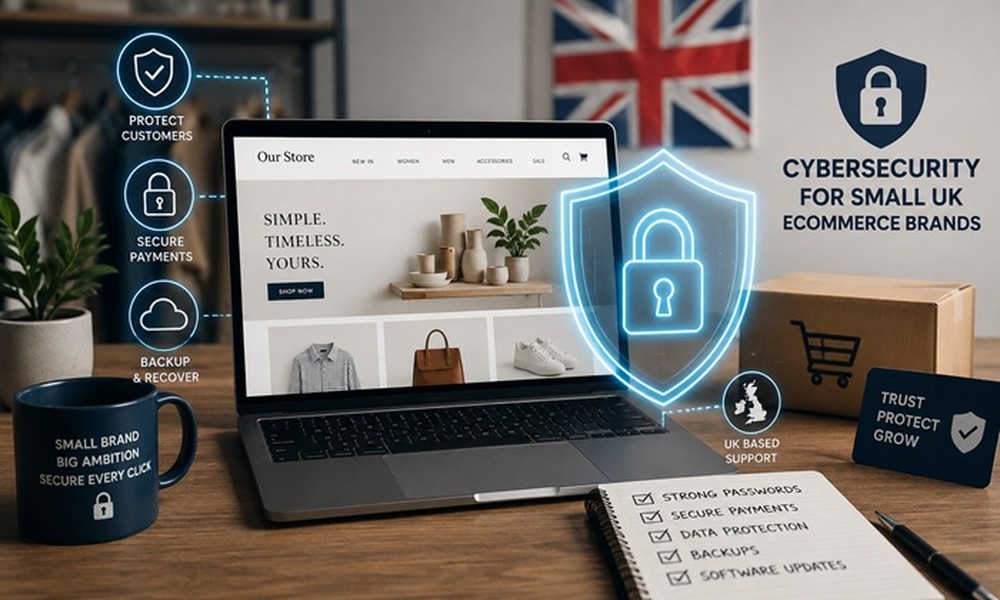
Small UK ecommerce brands are increasingly targeted by cybercriminals – not despite being small, but because of it. Larger retailers have dedicated security teams; smaller ones often have a single founder managing everything. Cybersecurity for small UK ecommerce brands doesn’t require enterprise budgets or full-time IT staff. It requires the right tools, applied consistently.
Why UK Small Ecommerce Businesses Are at Risk
The UK’s National Cyber Security Centre (NCSC) reports that over 60% of small businesses that suffer a significant cyberattack close within six months. For ecommerce brands handling payment data and customer information, the stakes are even higher – both financially and under GDPR compliance rules.
Essential Cybersecurity Steps for UK Ecommerce
1. Two-Factor Authentication on Everything
Your Shopify or WooCommerce admin, your domain registrar, your email hosting – all of it needs 2FA enabled immediately. Use an authenticator app (Google Authenticator, Authy) rather than SMS-based codes, which can be intercepted.
2. SSL Certificate and HTTPS Enforcement
If your ecommerce site still isn’t running on HTTPS, you’re losing customer trust and search rankings simultaneously. Most hosting providers now include free Let’s Encrypt SSL certificates. There’s no reason not to have this.
3. Regular Automated Backups
A ransomware attack or hosting failure can wipe your store in minutes. Tools like UpdraftPlus (for WooCommerce) or Shopify’s built-in export tools should be running automated daily backups to an external location – not just your hosting account.
4. Secure Payment Processing
Never handle raw card data on your own servers. Use Stripe, PayPal, or Klarna for payment processing – these providers carry PCI DSS compliance so you don’t have to. Avoid custom checkout flows that touch card numbers.
5. Employee/Contractor Password Manager
Even solo operations often share access with VAs or developers. Use 1Password or Bitwarden Teams to share credentials securely without ever emailing a password. Both have affordable plans for small teams.
Cybersecurity Tools: Cost vs. Protection
| Tool | Threat Addressed | Monthly Cost (GBP) | Priority |
| 2FA App | Account takeover | Free | Critical |
| SSL Certificate | Data interception | Free-£10 | Critical |
| Backup Tool | Data loss/ransomware | £5-15 | High |
| Password Manager | Credential theft | £3-8/user | High |
| Security Plugin (WP) | Malware/brute force | Free-£20 | Moderate |
Pro Tips for UK Ecommerce Owners
- Register your domain for at least 2 years and enable domain lock – expired or hijacked domains are a real attack vector.
- Check your GDPR compliance annually. The ICO fines for small businesses have increased significantly. A free assessment is available at ico.org.uk.
- If you run WooCommerce, install Wordfence – the free tier blocks the vast majority of common attacks automatically.
Common Mistakes to Avoid
- Reusing passwords across platforms – one breach exposes everything.
- Delaying software updates – most successful attacks exploit known vulnerabilities that have already been patched.
- Assuming your hosting provider handles security – they protect the server, not your application.
FAQs
Do I need to comply with GDPR as a small UK ecommerce brand?
Yes. If you process any personal data from UK or EU customers – including email addresses – GDPR applies regardless of your company size. The ICO offers guidance specifically for small businesses.
What is the most common cyberattack against small ecommerce brands?
Credential stuffing attacks – where stolen username/password combinations from other breaches are tried on your admin login. Strong, unique passwords and 2FA prevent the vast majority of these.
Is Shopify safer than WooCommerce for small UK brands?
Shopify handles more security infrastructure for you (PCI compliance, hosting security). WooCommerce gives more control but requires more active management. For founders without technical backgrounds, Shopify’s security model is easier to maintain correctly.
Cybersecurity doesn’t require perfection – it requires consistency. Enable 2FA today, set up automated backups this week, and audit your password practices this month. Those three steps alone put you ahead of most small UK ecommerce brands.